Friday, June 6, 2014

Cauliflower - The Magical Vegetable!

Cauliflower - The Magical Vegetable!

cauliflower.JPG

I think cauliflower is magical.

No, I’m not kidding. Ok, maybe a little. It’s not magical. But if you are on a low carbohydrate diet, it can be pretty amazing.

I never really cared for cauliflower. Let’s be honest here. It looks odd and smells terrible. Unless it’s doused with cheese, cauliflower is barely palatable. But with a little work and imagination, it transforms from this weird vegetable to something delicious and low carb. Hence, magical.

First, the stats. 4 ounces of cauliflower has 6 grams of carbohydrates, roughly 3 grams of which are fiber (3 gm net carbs). By comparison, 4 oz of broccoli has 4.5 net grams and 4 oz of asparagus has 2 net grams. 4 oz of sweet potato has more than 19 net grams.

Great, cauliflower is decidedly low carb. So is dirt. Where’s the magic? Here it comes:

Cauliflower “fried rice”: Recipe  cauli-rice.jpg


Cauliflower “mashed potato”: Recipe mashedcauli.jpg


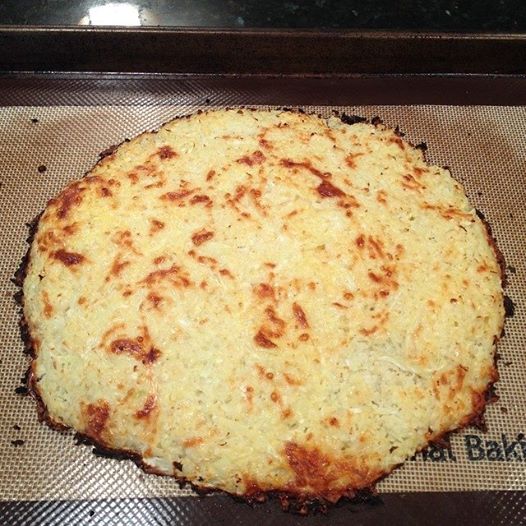
Cauliflower “pizza crust”: Recipe LCPIzzacrust.jpg

Wednesday, May 7, 2014

Before the Race

It’s 3 hours before my first half-marathon. I’m excited and nervous, alternating between “you got this” and “what the heck was I thinking?” I was never able to run even  a ¼ mile in high school. Then last June, after losing 50 lbs and completing multiple rounds of P90X, I decided to try to run a full mile - just to see if I could. Surprisingly, I did it. And here I am, less than a year later, racing 13.1 miles with an actual goal - under 2:00.

As I trained, logged miles in the snow and ice and rain and cold, I never really thought about race day itself. Well, I thought about the race of course, but not really about this specific time - the morning before the race. More specifically still, I never thought about what I should eat.  There is abundant advice about pre- and intra-race fueling.  There is also a fair amount of traditional wisdom. “Nothing new on race day” “Avoid foods high in fat and protein which are harder to digest” “No high fiber foods”  are just a few of the common mantras.

Unfortunately, these are culled from a population who eat bowls of pasta to carb-load the day before a race, followed by bagels with peanut butter and bananas on race-day morning.  For me, that would leave me in a food coma far after the opening gun sounds, with insulin levels spiking, my liver utterly confused, and a carb hangover for the ages. No, traditional methods probably won’t work for a long-term low carber.

So what to do? I have some real issues to keep in mind:

1. Fuel. While my body uses fat as a primary fuel source, there will still be a fair amount of glycogen usage. I don’t really know how to balance that in the short term with the ill effects that carbs will have.

2. Digestion. Most low carb foods are either full of fat and protein (like steak and eggs, yum) or fiber (vegetables). Both of these can provide longer term fuel, but take much longer to digest. As I don’t really want my blood diverted to my gastrointestinal tract while I’m running, I need this stuff digested before race time. Incidentally, it is this slow digesting of fat and protein that makes low carb diets so effective. But that’s for another day.

3. Hydration. Drinking adequate water is a big part of low carb dieting. But seriously, I can’t beat the 2 hour mark if I have to stop every 20 minutes to use the facilities.

So what am I doing? I’m blazing a trail (sort of). Really I’m reaping the rewards of poor planning in this area.  I made some low carb pancakes, had a cup of coffee, and chocolate Shakeology with almond milk and peanut butter.  Hopefully over the next 3 hours, this will provide me with enough fuel to get through the race with no adverse effects.

Edit:
I’m happy to report that my race day fuel strategy worked nicely. I did not experience any gastrointestinal distress, had plenty of energy, and no muscle cramps.  I ate some high-carbohydrate snacks during the run, but felt no ill-effects and did get some boost from them. My official finishing time was 1:57:46, well under the 2 hour goal I had set.

Wednesday, April 30, 2014

6 Tips to Survive Your First Month on a Low Carbohydrate Diet

I’m a huge fan of low carb diets. I’m not picky as to which one - South Beach, Atkins, Protein Power - they all have merit.  They all work too, and are sustainable ways of eating in the long run.  But that does not make them easy. And no matter how much enthusiasm you start with, that first month can be rough. Here’s how I survived.

1. Don’t allow yourself to get hungry. Seriously, this is the single most important secret to success. These are NOT calorie restricted diets.  Trying to monitor caloric intake and allowing yourself to get hungry is a set up for disaster.  There are a number of scientific reasons, but the psychological ones are more pressing. If you are full with good quality fat and protein, you’ll walk right past that doughnut without a second thought.  But let yourself near that doughnut when you’re hungry, and it’s all out war. Your mind is saying “you need this” and your pancreas is shooting out insulin, you’re salivating and your will is crumbling. It’s over - you never had a chance. Stay full, and keep low carb snacks on hand. Nuts are salty, crunchy, and satisfying.

2. Drink lots of water.  There’s a natural diuresis that takes place with low carb diets and the likelihood of dehydration is significant. And if you actually get into ketosis, the water will help flush things out. I used a rule of thumb - weight, in kilograms = ounces of water.  So for a 220 lb individual, that would be 100 kg or 100 ounces of water (around 3 Liters). It takes focus, but it makes things a lot easier.

3. Eat enough salt. Hand in hand with the diuresis is natriuresis, or salt loss.  It’s easy to become weak, tired, and dehydrated without adequate salt intake.

4. Don’t exercise. Wait, what? Promoting a healthy lifestyle without exercise?  Well, yes. At first. Your body is adjusting to a metabolism where fat is the primary fuel source as opposed to carbohydrates. This process, coined “ketoadaptation” can take weeks to months depending on your level of carbohydrate restriction and fat intake. During that time, you may feel tired and listless. Exercise will be difficult if not impossible and it can be discouraging enough to call the diet quits.  Just be patient. You’ll be able to go all out soon enough. We’ll discuss exercise in future posts.

5. Avoid sugar free foods. You heard me. No sugar free chocolate, no sugar free Atkins bars, no sugar free gummy bears. None of that stuff. (I don’t have a personal opposition to sucralose or stevia, but that’s a debate for a different day). The main issue is, of course, the dreaded sugar alcohol maltitol. Besides the disgusting gastrointestinal effects, some people absorb maltitol similarly to real sugar. As such, many low carb experts suggest counting roughly one-half of the grams of maltitol as part of your net carbs.  Why is this so important? Because it will stall your weight loss and leave you feeling frustrated.

6. Avoid the scale. The scale is a big ol’ liar that will discourage you. You may lose 3 inches off your waist and your pants need a rope around them to stay up. You may feel stronger and better rested than you have in years. You may have fantastic mental clarity and have lost that late afternoon crash.  But because your body is shifting fluid around, the scale won’t move, and you’ll feel like the diet’s a failure and give up.  Throw your scale out. Or at least hide it.

These tips helped me survive the first 4-6 weeks of my low carb diet until I really got into the swing of things.

Tuesday, March 11, 2014

What's the Secret?


What’s the Secret?

I think the most common question I get from people who haven’t seen me in a while is: What’s the secret? How did you do it?

A little background.  I’m a 40-something cardiologist. Which means, for the majority of my life, I spent hours reading, studying, and memorizing things. Most of this took place while sitting on my backside, generally eating or drinking something of poor nutritional value. Sure, I could blame my parents, my awful genetics, and some great TV shows, but like all things, the real blame was with me.  I weighed an awful lot. Not quite a metric ton, but more than my 5’10” frame could handle. I looked terrible, felt terrible, and had no street cred when I told my patients to lose weight.

Then I decided I’d had enough of that life. I got my act together, and I lost the weight and the body fat and started eating well and working out. Of course, people noticed. Thus, the question – what’s the secret?

My first instinct was to chuckle and say, “There is no secret. It’s just hard work. I’m eating better, less carbs, and exercising. Anybody can do it.”  But the truth was, people weren’t doing it. Why?

 Because, after all, there is a secret. It just took me a long time to figure out what it was.

Losing weight is hard. Sometimes it’s really hard. But, it’s achievable. There are plenty of examples. But you need some ingredients to cook up a successful weight loss dish:

  1. An eating plan. This is, far and away, the most important aspect of weight loss. You cannot out-exercise a bad diet.  Doing 30 straight minutes of burpees will ultimately fail to a box of chocolate cupcakes. Because long after the caloric burn and EPOC from the burpees have faded, you’ll still be chowing down.  Is there a perfect, one-size fits all plan? Well, maybe or maybe not. But there’s probably a plan that fits you very nicely. It takes some focus and consistency to figure it out. For me, it was Protein Power by the Drs. Eades. It’s a carbohydrate restricted diet which is very easy to follow. I also recommend The South Beach Diet. Both are effective, safe, and livable.

  1. An exercise plan. Is exercise necessary to lose weight? Nope. Is it necessary to look skinny in clothes? Nope. Is it necessary to look great in a bathing suit or naked? Absolutely. Plus it just makes you feel good. And, if you just did P90X Plyo X, you’re far less likely to eat that jelly doughnut and waste your efforts.

But neither of these are a big secret, are they? No, here’s the secret. You need to know your WHY.

Your what? No, your WHY. 

Your WHY is your reason, your motivation for doing this. It is the emotional connection you have to your journey. It’s that little piece that finishes the puzzle. It’s what makes you get up at 11pm because you fell asleep and forgot to workout 2 days in a row. It helps you walk past the fresh baked cookies.  And the deeper your emotional connection to your WHY, the stronger your motivation will be.

For me, it started out as pure vanity. I wanted to look better. I couldn’t stand looking at my big gut anymore. I wanted nice clothes. I didn’t want to be embarrassed at gatherings. I didn’t want to feel guilty about what I ate hours after I ate it. I wanted to be free.  Eventually it became about being strong and healthy for my kids. But it’s still very much about vanity.

You want the secret? Figure out WHY you’re losing weight. Meditate on it. Dream about it. CONNECT to it. Then get a plan together. You’ll be on your way. I'd be happy to help you get your plan together.